
A blocked toilet is more than a minor inconvenience; it is a sanitation emergency that disrupts the functionality of the entire home. When a toilet fails to drain, the risks extend beyond the immediate inability to flush. Stagnant water breeds bacteria, foul sewer gases can permeate the living space, and the potential for overflow poses a significant threat to flooring and sub-structures. While the prospect of clearing a blockage may seem daunting, the majority of obstructions are mechanical in nature and can be resolved without professional intervention using the correct techniques and physics.
Industry data indicates that approximately 46% of homeowners prefer to attempt do-it-yourself repairs before contacting a trade professional. In 2026, with the rising cost of emergency service calls, mastering these DIY plumbing skills is economically prudent. However, the efficacy of a home repair depends entirely on correctly diagnosing the severity of the clog—whether it is a simple soft blockage or a symptom of a deeper sewer line issue.
The standard protocol involves a graduated approach. One should begin with mechanical suction using a specific type of plunger. If mechanical force fails, chemical reactions using household safe agents like baking soda and vinegar can break down organic matter. For physical obstructions located deeper in the trapway, a drain snake or auger becomes necessary. In severe cases involving hard blockages, professional tools are required. Preventative strategies are equally critical, focusing on strict adherence to waste disposal guidelines. The following guide provides a comprehensive, technical breakdown of how to restore function to a blocked toilet.
Key Takeaways
- Diagnostic First: Assess water levels and draining speed to distinguish between a localized clog and a main line backup before attempting a fix.
- Tool Selection: Success relies on using a flange plunger (with a rubber extension) rather than a standard cup plunger, which is designed for flat sinks.
- Lubrication Technique: Reducing friction is key; utilize dish soap and hot water to lubricate the trapway and soften organic solids.
- Chemical Reaction: Leverage the expansion of gas created by combining baking soda and vinegar to displace minor blockages without damaging porcelain.
- Mechanical Extraction: Use a dedicated Toilet Auger (Plumbing Snake) to hook and retrieve foreign objects rather than pushing them further down.
- Vacuum Method: In scenarios where water must be removed to reach a clog, a wet-dry vacuum effectively extracts both liquid and solid obstructions.
- Avoid Harsh Chemicals: Caustic chemical drain openers can generate excessive heat, damaging PVC pipes and degrading toilet wax seals.
- Water Control: Locate the isolation valve behind the toilet to immediately cut off the water supply and prevent overflow during repairs.
- Persistence: Hydraulic shocks from plunging often require repetition; do not abandon the method after a single attempt.
- Professional Assessment: Recognize when a blockage indicates a septic failure or root intrusion, requiring a plumber to prevent hazardous contamination.
Common Causes Of Clogged Toilets
- Excessive Toilet Paper Usage: Using multi-ply paper in large volumes creates a dense mass that cannot navigate the tight S-curve of the trapway, halting flow.
- "Flushable" Wipes: Despite marketing claims, synthetic wipes do not disintegrate in water like cellulose paper, leading to accumulation and stubborn blockages.
- Hygiene Products: Cotton swabs, feminine hygiene products, and dental floss expand when wet and snag on pipe imperfections, catching other debris.
- Foreign Object Obstruction: Items accidentally dropped into the bowl, such as razors, toys, or jewelry, create hard stops that trap waste material.
- Low-Flow Fixture Limitations: Older first-generation low-flow toilets often lack the requisite flushing pressure to clear the bowl completely, leading to gradual buildup.
- Mineral Calcification: Hard water leads to scale buildup, narrowing the pipe diameter and creating rough surfaces that cause slower drainage and snag waste.
- Sewer Line Compromise: Tree root intrusion or collapsed external pipes stop water from exiting the property, causing backups regardless of toilet condition.
- Trapway Stricture: Accumulation of urine salts and fecal matter over decades can narrow the internal trap of the toilet itself.
- Improper Food Disposal: Flushing fats, oils, and grease (FOG) results in solidification within the pipes, creating a hydrophobic barrier that catches solids.
- Septic System Failure: For properties off the grid, a full septic tank or a saturated leach field prevents the toilet from discharging waste, causing immediate backflow.
- Plumbing Vent Issues: If the roof vent stack is blocked by debris or nests, air cannot enter the system to equalize pressure, resulting in slow drainage.
Understanding these causes is the first step toward diagnosis. If the toilet was used normally, a soft clog is likely. If a foreign object is suspected, mechanical retrieval is required.
Minor vs Major Toilet Blockage
| Minor Blockage (Local) | Major Blockage (Systemic) | |
|---|---|---|
| Primary Cause | Too much paper, human waste, or lack of water pressure. | Main sewer line obstruction, tree roots, or deep-set foreign objects. |
| Location | Restricted to the toilet trap (the S-bend) or the immediate flange. | Located deep in the stack, sub-slab piping, or the municipal connection. |
| Symptoms | Slow draining water, water level rises then slowly recedes, no effect on other fixtures. | Water surfacing in shower drains when flushing, gurgling sounds from sinks, sewage odors. |
| DIY Methods | Plunging, hot water flush, enzyme cleaners, closet auger. | Generally ineffective; requires hydro-jetting or camera inspection. |
| When to Call a Plumber | Only if the toilet leaks at the base or if the clog persists after distinct DIY attempts. | Immediately. Continued use can cause sewage to flood the home interior. |
| Risk of Ignoring | Unusable bathroom, potential for bacterial growth in the bowl. | Catastrophic structural water damage and biohazard contamination. |
Essential Tools and Materials To Unclog A Blocked Toilet
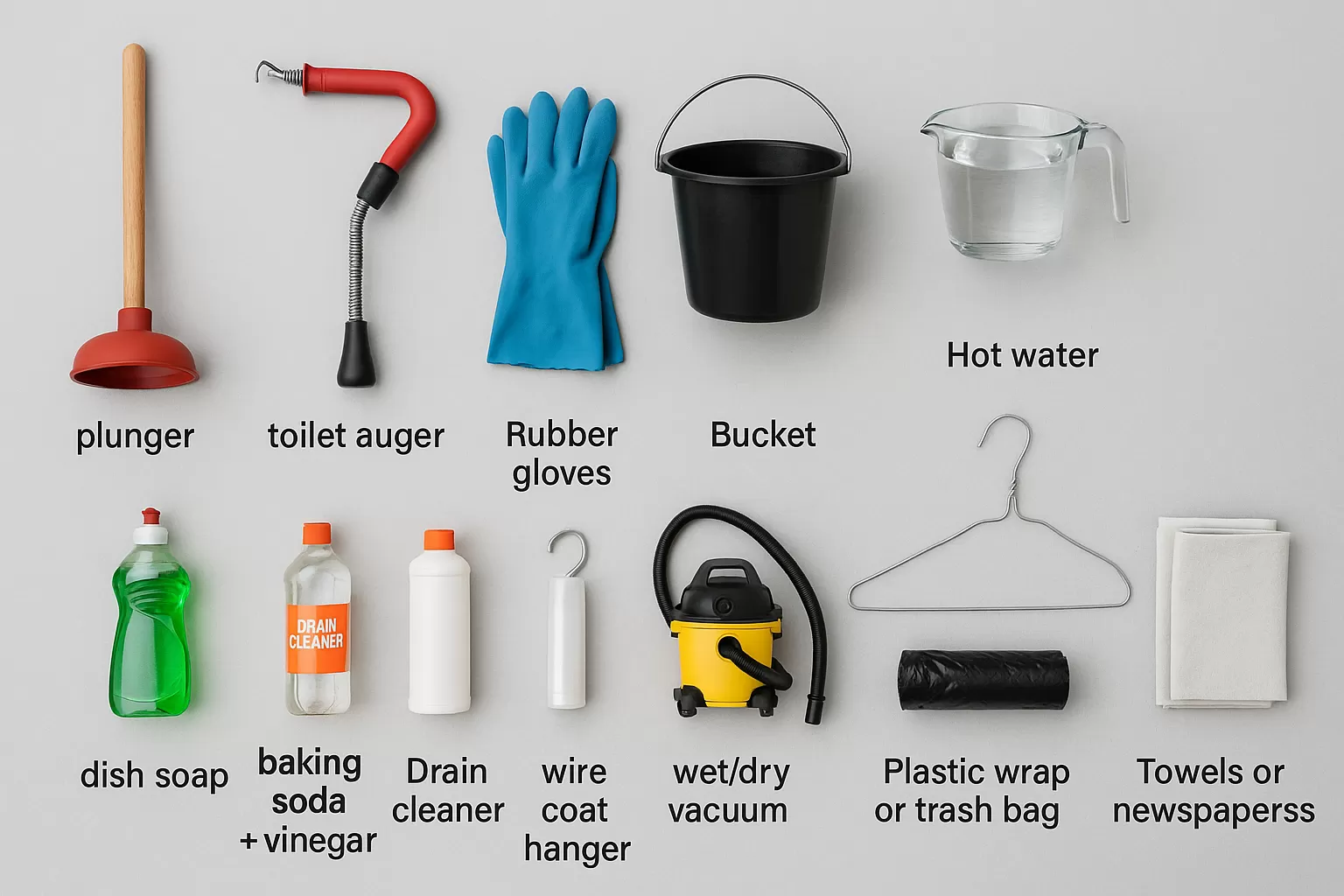
Professional results require the correct equipment. Having these tools on hand prevents panic during an overflow event:
- Flange Plunger: Distinct from a cup plunger, this tool has a soft rubber flap that fits inside the toilet drain to create a hydraulic seal.
- Toilet Auger (Closet Auger): A specialized snake with a protective rubber sleeve to prevent scratching the porcelain, designed to navigate the trapway.
- Protective Gear: Elbow-length rubber gloves and eye protection are essential to shield against bacteria and splashing contaminated water.
- Bailing Bucket: A small container is needed to manually remove excess water from the bowl to prevent splashing or overflow during plunging.
- Hot Water Source: Heat increases the solubility of organic fats and soaps; a supply of hot (not boiling) water is critical.
- Liquid Dish Detergent: High-viscosity soap acts as a lubricant, reducing friction between the blockage and the ceramic pipe walls.
- Baking Soda and Vinegar: These common pantry items create an endothermic chemical reaction that agitates and loosens debris.
- Enzymatic Drain Cleaner: A biological alternative to caustic chemicals, using bacteria to eat through organic waste over time.
- Wire Coat Hanger (Emergency Only): When professional tools are unavailable, a straightened hanger can manually break up soft clogs near the drain opening.
- Wet/Dry Shop Vacuum: A powerful tool capable of sucking water and obstructions *out* of the drain rather than pushing them in.
- Surface Protection: Plastic sheeting or old towels to protect the bathroom floor from sewage water damage.
- Absorbent Materials: Newspapers or paper towels for immediate containment of minor splashes.
Assemble these items before beginning work to ensure the process is efficient and sanitary.
How To Unclog A Toilet With The Plunger Method?
Plunging is effective because it uses water pressure to force the blockage back and forth until it dislodges. Correct technique is vital for success.
- Select the Correct Tool: Verify you are using a flange plunger. The extension flap is crucial for sealing the non-flat surface of a toilet bowl.
- Manage Water Levels: Ideally, the water should cover the head of the plunger. If the bowl is full to the brim, bail some water out. If it is empty, add water to ensure the plunger is submerged.
- Establish the Seal: Insert the plunger into the drain opening at an angle to allow air inside the cup to escape. A seal formed with air trapped inside compresses air rather than water, reducing force.
- Execute the Motion: Start with a gentle push to settle the seal, then switch to vigorous, rapid thrusts. The focus should be on both the push (pressure) and the pull (suction) to destabilize the clog.
- Test Drainage: After 15–20 strokes, break the seal sharply. If the water drains rapidly, the block is cleared.
- Final Flush and Sanitize: Flush the toilet to ensure clear flow. Clean the plunger immediately with bleach or disinfectant before storage.
If the water swirls but does not drain, the blockage may be solid or located too deep for the plunger's vacuum to affect. In this case, proceed to chemical or physical extraction methods.
Baking Soda And Vinegar Solution
For non-emergency clogs caused by organic waste or paper, a chemical reaction can break down the binding agents of the clog without damaging the plumbing pipes.
Steps for Using Baking Soda and Vinegar to Unclog a Toilet:
- Preparation: Ensure the water level is halfway down the bowl. If the water level is too high, the reaction will dilute too quickly.
- Alkaline Application: Pour one cup of baking soda directly into the drain opening. Try to get the powder deep into the water.
- Acid Application: Slowly pour two cups of white vinegar into the bowl. Pouring slowly prevents the resulting foam from overflowing the rim.
- Reaction Time: The mixture will fizz violently, releasing carbon dioxide gas. Allow this to sit for at least 30 minutes. Ideally, leave it overnight for tough organic buildup.
- Thermal Flush: While the mixture sits, heat a gallon of water. Pour the hot water into the bowl from waist height to add gravitational force to the thermal shock.
- Verification: If the water drains, flush the toilet normally. If it remains stagnant, the clog is likely a hard object requiring a snake.
This method is safe for septic systems and avoids the corrosion risks associated with commercial sulfuric acid cleaners. If this fails, professional intervention or a professional plumbing service may be required.
Hot Water Tricks To Unclog A Toilet
Heat is a powerful solvent. Using hot water can melt fatty deposits and degrade cellulose in toilet paper, allowing it to pass through the trap.
1. The Boiling Water Precaution
- Warning: Never use boiling water (100°C) on a ceramic toilet. The sudden thermal shock can cause the porcelain to crack, destroying the toilet.
- Technique: Use water heated to roughly the temperature of hot tea. Pour it from a standing position to direct the force straight into the drain hole.
- Effect: This helps dissolve water-soluble clogs like simple tissue paper overload.
2. The Lubrication Method (Soap & Heat)
- Application: Squirt a generous amount (1/2 cup) of dish soap into the drain. The soap surrounds the clog, reducing friction.
- Soak: Allow the soap to sink into the clog for 10 minutes.
- Flush: Follow with a bucket of hot water. The combination of heat and lubrication can often slide a clog through the U-bend.
3. The Chemical-Thermal Combo
- Process: Combine the baking soda/vinegar method with a hot water finish.
- Timing: Wait until the fizzing stops completely before adding the hot water to maximize the pressure changes.
- Observation: Watch for the water level dropping rapidly, which indicates the blockage has released.
Always have towels ready for splashback. If the water level does not drop, do not flush the tank handle, as this will cause an overflow.
How To Use A Plumbing Snake To Unclog A Toilet
When plunging fails, it indicates a physical obstruction that must be broken up or retrieved. A toilet auger (snake) is the professional tool for this task.
- Safety and Prep: Wear heavy rubber gloves. Keep a garbage bag nearby to immediately dispose of any waste retrieved by the auger.
- Insertion: Pull the auger handle up to retract the cable into the housing. Insert the protective curved tip into the toilet drain. This curve is designed to follow the trapway without scratching the visible porcelain.
- Deployment: Push the handle down to extend the cable into the trap. Rotate the crank handle clockwise steadily. Do not force it; let the rotation do the work.
- Navigating the Clog: When you feel resistance, you have reached the blockage. Continue rotating to drill through the mass or hook onto the object.
- Retrieval vs. Fragmentation: If the object feels hard (like a toy), stop rotating and gently pull back to retrieve it. If it feels soft, continue rotating to break it apart.
- Cleanup: Retract the cable while wiping it with a disinfectant rag. Flush the toilet to confirm the line is clear.
Unlike chemical methods, the snake provides tactile feedback, telling you exactly where and how hard the blockage is. It is the most effective DIY method for stubborn clogs.
Natural Cleaning Solutions
Beyond emergency unclogging, regular maintenance using natural solutions can prevent buildup from occurring. These mixtures maintain pipe diameter and flow velocity:
- Weekly Maintenance Flush:
Combine hot tap water and degreasing dish soap. Pour this into the bowl once a week to prevent fats and sludge from adhering to the trapway walls. - The Fizzing Maintenance:
Use the Baking Soda and Vinegar method monthly, not just for clogs. The gas expansion helps scour the pipe walls of minor mineral deposits and biofilm. - Lubricated Plunging:
Even if the toilet is not fully stopped, if it drains slowly, add dish soap and plunge gently. This moves water through the siphon jet to clear incipient blockages. - Epsom Salt Deterrent:
Epsom salts creates a saline brine that can help break down organic waste. Dissolve a cup in the bowl, wait 15 minutes, and flush. - Sodium Carbonate Mix:
Mixing washing soda (sodium carbonate) with hot water creates a highly alkaline solution that is effective at breaking down grease and grime without damaging pipes. - Manual debris checks:
Periodically use a wire hanger or auger to check the rim jets and the main drain for mineral scale that might reduce flush power.
Integrating these habits into your cleaning routine significantly reduces the likelihood of facing a complete blockage.
When To Call A Professional Plumber For Blocked Toilets
- Persistent Overflows: If the toilet overflows immediately upon flushing despite your efforts, the blockage is total and likely deep in the piping.
- System-Wide Backups: If using the washing machine causes water to rise in the toilet, or flushing the toilet causes the shower to gurgle, the issue is in the main sewer line, not the toilet itself.
- Structural Damage Signs: Water pooling around the base of the toilet suggests the wax seal has failed, often due to back-pressure from a chronic clog.
- Suspected Hard Blockages: If you know a large foreign object (like a smartphone or toy) is lodged in the pipe, amateur removal attempts can push it into the main stack, turning a small repair into a major excavation. A plumber can use camera inspection and specialized retrieval tools to resolve plumbing emergencies safely.
Conclusion
Successfully unclogging a blocked toilet is a manageable task for most homeowners, provided the correct diagnostic steps and tools are employed. Starting with mechanical plunging and progressing to chemical or auger methods solves the vast majority of issues. However, recognizing the difference between a simple clog and a systemic sewer failure is vital. Regular maintenance of the trapway and mindful waste disposal are the best defenses against recurrence. Should DIY methods fail, or if signs of a main line backup appear, securing a licensed plumber ensures the integrity of your home's sanitation system is restored without further damage.