
Replumbing Your Home: A Comprehensive Infrastructure Guide
Plumbing systems are the circulatory system of any modern structure, yet they are often the most overlooked component until a catastrophic failure occurs. While pipes are designed for durability, they are finite assets with a specific lifecycle. Whether due to material degradation, shifting foundations, or outdated installation practices, there comes a point where spot repairs are no longer economically viable.
A full replumb involves the complete removal or bypass of existing water distribution and waste lines, replacing them with modern, code-compliant materials. This process is distinct from standard maintenance; it is a capital improvement that restores the sanitary integrity of the building, improves water pressure, and eliminates the risks associated with galvanic corrosion and material fatigue.
Homeowners often hesitate due to the scale of the project, primarily asking, "What is the financial and logistical impact?" The following analysis breaks down the technical and economic variables to provide a transparent view of the replumbing process in 2026.
Calculating the Investment: How Much Does Replumbing Cost?
The cost of replumbing is not a flat rate but a calculation based on linear footage, material commodity prices, and architectural accessibility. Just as renovating a foundation varies by soil type, replumbing costs fluctuate based on whether the home sits on a concrete slab, a raised foundation, or has multiple stories requiring complex vertical risers.
Market Rates and Variables
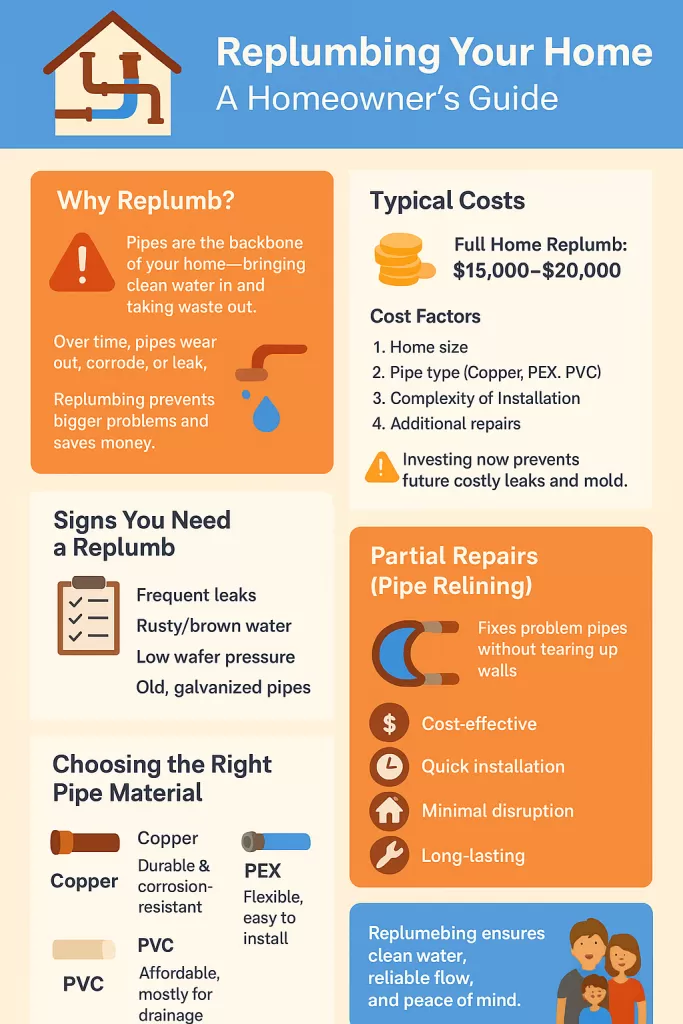
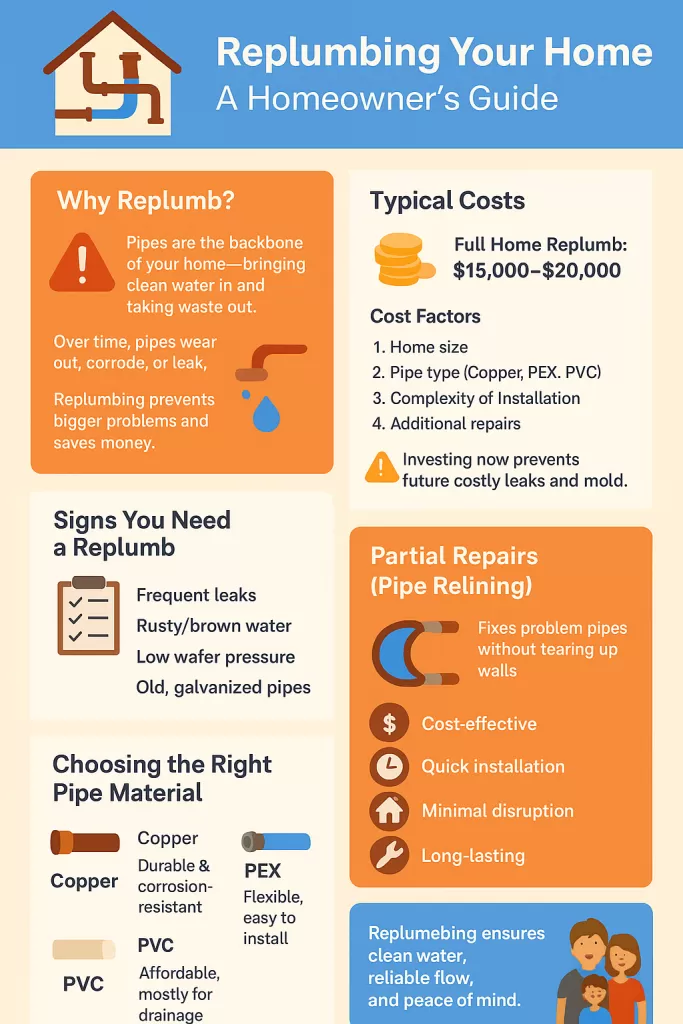
In current 2026 market conditions, a comprehensive repiping project for a standard 3-bedroom, 2-bathroom home typically falls within the $15,000 to $20,000 range. However, accurate budgeting requires understanding the specific drivers of these costs:
- Volumetric Scope and Fixture Count: Costs are driven by the number of "wet" areas. A home with three bathrooms and a laundry room requires significantly more manifold connections and piping than a home with a single central wet wall.
- Material Selection: The choice between Copper (Type L or M) and PEX (Cross-linked Polyethylene) drastically affects material costs. Copper prices fluctuate with global metal markets, while PEX offers a stable, lower-cost alternative with high durability.
- Structural Accessibility: Retropiping a home with a crawl space is significantly cheaper than one on a slab foundation, which may require tunneling or routing pipes through the attic and down walls (requiring drywall demolition).
- Restoration and Code Upgrades: The primary quote often covers plumbing only. Homeowners must also budget for drywall patching, painting, and potential code-mandated upgrades if existing valves or venting are non-compliant.
While the upfront investment is substantial, it must be weighed against the cumulative cost of emergency leak repairs, water damage restoration, and the potential devaluation of a home with compromised infrastructure.
Critical Indicators of Systemic Failure
Plumbing failures rarely happen overnight; they present a series of escalating symptoms. Recognizing these systemic warning signs can prevent catastrophic flooding and mold remediation:
- Recurrent Pinhole Leaks: If you fix a leak in one area only to have another appear shortly after, the system has likely reached the end of its service life. This is common in older copper pipes suffering from pitting corrosion or polybutylene pipes that become brittle.
- Oxidation and Discoloration: Brown or reddish water indicates internal rusting of galvanized steel pipes. This is not just an aesthetic issue; it signals that the pipe walls are thinning and close to bursting.
- Flow Restriction: Mineral deposits and scale buildup inside older metal pipes reduce the internal diameter, resulting in low water pressure that cannot be fixed by cleaning aerators or showerheads.
- Material Obsolescence: Homes built before the 1960s with galvanized steel, or the 1980s/90s with polybutylene, are ticking time bombs. Insurance companies may even refuse coverage for these known failure points.
Addressing these symptoms proactively allows for a planned renovation rather than an emergency response, which is almost always more expensive and disruptive.
Alternative Solutions: The Role of Pipe Relining
For drainage and sewer systems specifically, excavation and replacement are not always necessary. Technology known as Cured-in-Place Pipe (CIPP) or pipe relining offers a structural restoration without the need for demolition.
Understanding Trenchless Technology
Relining involves inserting an epoxy-saturated felt liner into the existing damaged pipe. Once inflated and cured, this liner hardens into a new, seamless structural pipe within the old host pipe, effectively sealing cracks and blocking root intrusion.
Operational Benefits of Relining
- Cost Efficiency: By eliminating the labor required for trenching, concrete breaking, and landscape restoration, relining often costs 30-50% less than traditional excavation.
- Rapid Turnaround: Most residential relining projects can be completed in less than 48 hours, minimizing the time the household is without waste services.
- Preservation of Property: This method saves driveways, established gardens, and flooring from being destroyed to access buried lines.
- Durability: The epoxy liner is non-corrosive and joint-free, often coming with a life expectancy of 50 years, rivaling new PVC installation.
Note that relining is primarily for sewer and drain lines. Pressurized water supply lines typically require full replacement (re-piping) rather than relining due to the high pressure they must withstand.
Selecting Materials: PEX, Copper, and PVC
Modern plumbing utilizes three primary materials, each engineered for specific applications and environments. Making the right choice depends on water chemistry, budget, and climate:
- Copper (Rigid): The traditional standard for water supply. It is bacteriostatic (resists bacterial growth) and UV resistant. However, it is susceptible to pinhole leaks in acidic water conditions and carries a higher material and labor cost due to soldering requirements.
- PEX (Flexible): Cross-linked polyethylene is the dominant choice for modern retrofits. Its flexibility allows it to be snaked through walls like wiring, reducing demolition. It expands to accommodate freezing water, reducing burst risk, and resists scale buildup.
- PVC/ABS (Drainage): Polyvinyl Chloride is the standard for waste and vent lines. It is impervious to root penetration (unlike clay) and corrosion (unlike cast iron). It is rarely used for indoor hot water supply due to temperature limitations.
Expert consultation is vital here; for example, using PEX in an area with high rodent activity requires protective sleeving, while Copper may be ill-suited for homes with low-pH well water.
Project Logistics: Preparing for Replumbing
A successful replumb requires coordination between the homeowner and the contractor to minimize friction. Proper preparation ensures the crew has access and the project stays on schedule:
- Create Access Corridors: Contractors will need access to walls containing plumbing fixtures. Clear out vanity cabinets, move furniture away from wet walls, and ensure attic or crawl space access points are unobstructed.
- Plan for Utility Interruption: While good crews aim to restore water at the end of each day, there will be periods of shutoff. Plan to have bottled water for drinking and buckets for manual flushing if necessary during work hours.
- Contingency Budgeting: In older homes, opening walls often reveals secondary issues such as dry rot, mold, or electrical hazards. A 10-15% contingency fund prevents project stalls when these issues are uncovered.
- Technical Walkthrough: Before work begins, verify the scope with your plumber. Discuss permit requirements, the specific routing of new pipes (attic vs. crawl space), and the warranty terms for both parts and labor.
Conclusion: The Value of Infrastructure Integrity
Replumbing is more than a repair; it is a restoration of your home’s functional core. Whether necessitated by chronic leaks, low pressure, or the presence of obsolete materials, the investment yields immediate dividends in water quality and system reliability. For waste lines, exploring trenchless relining can offer a durable solution with minimal surface disruption.
By selecting the appropriate materials and partnering with qualified professionals, homeowners can secure their property’s plumbing infrastructure for decades. Proactive replacement eliminates the unpredictability of old piping, ensuring that the home remains safe, sanitary, and efficient.